An Overview of Washington’s “My Health, My Data” Act
On April 27, 2023, Governor Jay Inslee of Washington signed into law HB 1155, the “My Health, My Data” Act (MHMD Act). The MHMD Act claims to address the lack of protections for health data collected by entities not covered by HIPAA, the federal law that regulates how hospitals, health care providers, and other covered […]
CPRA regulations finalized and effective immediately
[Update: On March 30, 2023, the California Chamber of Commerce filed suit against the California Privacy Protection Agency, arguing that the amended regulations should not enter force until once year following finalization of the regulations. The court agreed, holding that enforcement cannot occur until one year after the regulations were finalized, thereby pushing the enforcement date […]
And then there were six!
On March 28, 2023, Gov. Reynolds of Iowa signed into law SF 262, a bill for an act relating to consumer data protection. By signing the bill into law, Gov. Reynolds established Iowa as the sixth state to establish a comprehensive data protection framework. “In our digital age, it’s never been more important to state, […]
The EU’s Digital Markets Act: Who it regulates, how to comply, and next steps
On October 12, 2022, the Digital Markets Act (DMA) was published in the Official Journal of the EU, thereby creating a new framework for regulating the European Union’s digital market.[1] The DMA seeks to prohibit certain unfair business practices by establishing rules and obligations for entities known as “gatekeepers,” which are large online platforms whose […]
Metaverse Law’s Lily Li to guest star on Threat Watch podcast to discuss risks of ChatGPT, generative AI, and LLMs
Near the end of 2022, generative AI models became something of a sensation. Art-based models like Midjourney, DALL-E, and Stable Diffusion threw the art world into a panic, prompting companies to ban AI-generated art.[1] Models like ChatGPT—and its underlying GPT-3.5 and GPT-4 LLMs—seemingly invaded every social sphere, from academia[2] to big tech,[3] and prompted many […]
The Digital Services Act: EU’s new gold standard for regulating online services and search engines
On October 19, 2022, the Digital Services Act (DSA) was published in the Official Journal of the European Union, thereby triggering its entry into force.[1] The DSA creates a first-of-its-kind regulatory framework that, like the General Data Protection Regulation (GDPR), could set an international benchmark for regulating intermediary services such as search engines, e-commerce platforms, […]
Creating trustworthy AI and reducing liability with NIST’s AI Risk Management Framework
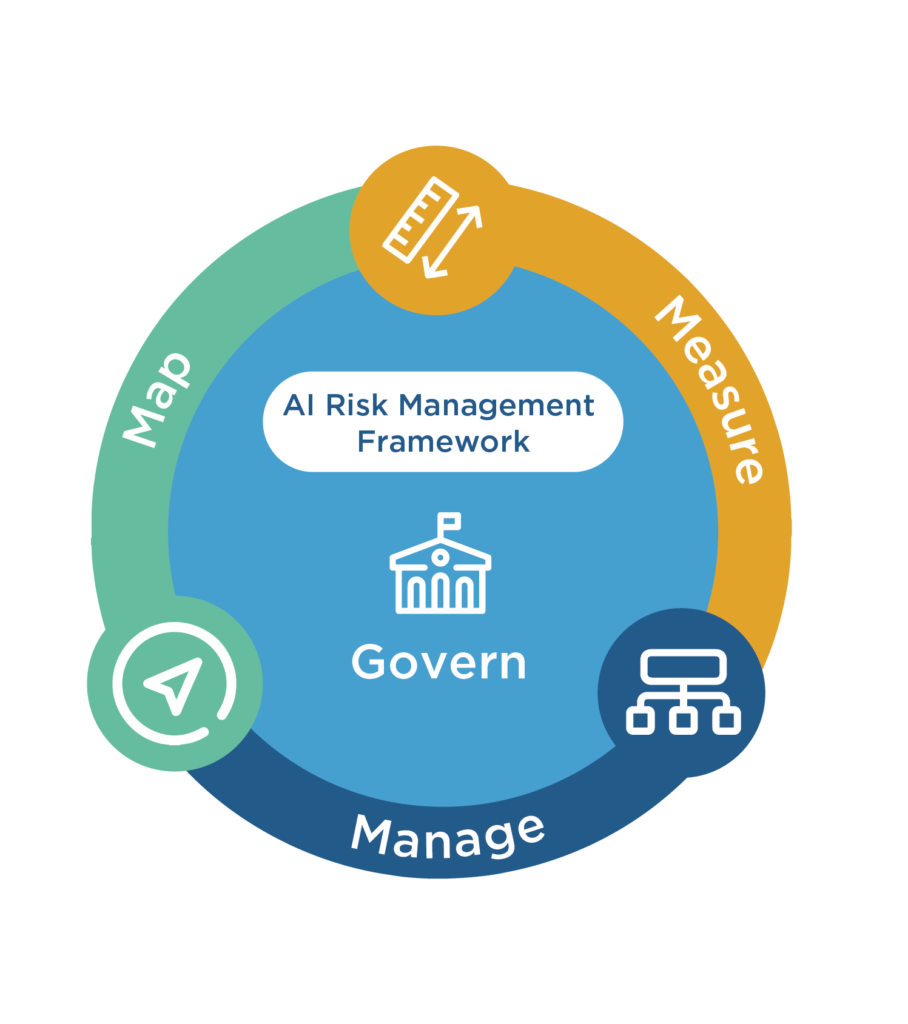
On January 26, 2023, the National Institute of Standards and Technology (NIST) released the first version of the Artificial Intelligence Risk Management Framework (AI RMF).[1] The AI RMF is a voluntary resource meant to help organizations “manage the many risks of AI and promote trustworthy and responsible development and use of AI systems.”[2] To support […]
What the EU’s Artificial Intelligence Act will mean for the global AI industry
On April 21, 2021, the European Commission proposed the Artificial Intelligence Act (AIA), a regulatory and legal framework for artificial intelligence systems.[1] On December 5, 2022, the Council of the European Union adopted its general approach to the AIA, which incorporated changes to the regulation.[2][3] Germany announced support for the AIA, but “sees some need […]
hiQ v. LinkedIn: User Agreements in the Age of Data Scraping

On November 4, 2022, LinkedIn announced a “significant win” for the platform and its members against “personal data scraping.” The win resulted from a 6-year legal battle that asked, in part, whether LinkedIn must allow hiQ Labs to scrape data from the public profiles of LinkedIn members. Last Friday, the U.S. District Court for the Northern District […]
The White House’s Blueprint for an AI Bill of Rights
In 2021, the global artificial intelligence (AI) market was estimated to value between USD 59.7 billion and USD 93.5 billion. Going forward, it is expected to expand at a compound annual growth rate of 39.4% to reach USD 422.37 billion by 2028. However, as financial and efficiency incentives drive AI innovation, AI adoption has given rise to potential harms. […]